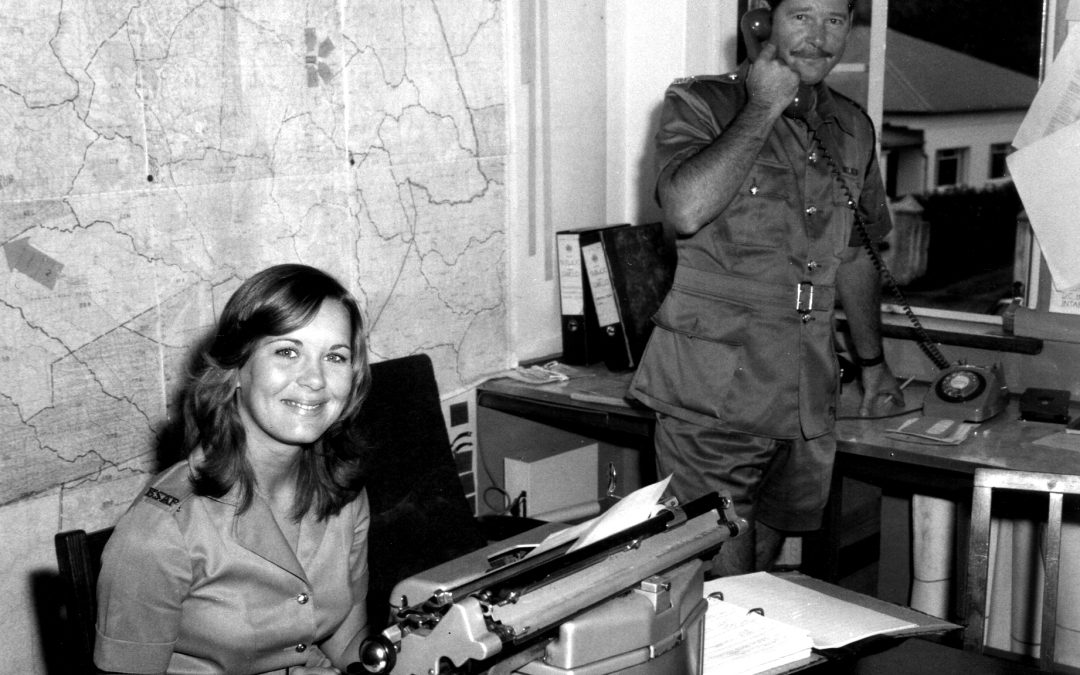
The Special Branch was responsible to the Deputy Commissioner (Crime and Security) for the gathering of intelligence. Certain sections within the BSA Police had been tasked with intelligence work since the late 1930’s, dealing mostly with aliens control and immigration. During the course of the Second World War a section calling itself XB had been formed.
The period of the Federation saw the British implement a Federal Intelligence and Security Bureau (FISB). This was an MI5 initiative, but XB remained intact. The breakup of the Federation resulted in the introduction of an autonomous Branch of the Force, called Special Branch in July 1962. With the later formation of the Central Intelligence Organisation (CIO), the Special Branch became a Branch of that new intelligence organisation. It became known as Branch 1. As noted above, the OC SB reported to two channels of command.
The Ground Coverage scheme of the BSA Police provided Special Branch with a uniquely granular, village‑level picture of political sentiment and population movement; it was essentially an early‑warning system built into everyday policing. Because constables were embedded in their communities, their routine observations fed a steady stream of low‑level intelligence that Special Branch could synthesise into broader assessments of subversion, agitation, and emerging threats.
Special Branch stations were established in most of the larger towns throughout the provinces. The functions of the Special Branch included the following:
- European/Counter Intelligence Desk – monitoring the inflow of immigrants or visitors to Rhodesia, from hostile or Eastern Block nations, and concern with the influence of Communist philosophies spread by Europeans, in addition to observations of unfriendly nations representation in Rhodesia (through diplomatic and journalistic infiltration);
- Nationalist Desk – black nationalist aspirations were the core of dissent around which the liberation struggle evolved and the close monitoring and thorough infiltration of nationalist political parties played a key role in the provision of intelligence, by Special Branch, to Government;
- Projects Section – as with most intelligence organisations of the 1960’s and 70’s, special projects and initiatives were abundant in the face of political dissention and guerilla warfare. This section was the initiator of psuedo operations, later to become the well known, much feared, Selous Scouts, amongst other successes;
- Technical – a specialist division within the intelligence community concerning itself with secret communications, mail and communications interception, and the gadgetry of modern day counter espionage and terrorism operations;
- Terrorist Desk (initially part of the Nationalist Desk) – concerned itself with intelligence gathering and support of the defence forces in their operations against terrorist gangs which commenced infiltrations into Rhodesia during the early 1960s, in the absence of credible military intelligence initiatives;
- Trade Union Desk – initially, the trade unions played a pivotal role in uplifting nationalist sentiment in Rhodesia, before the more well-recognised nationalist parties evolved. The unions' political sentiment was closely monitored.