
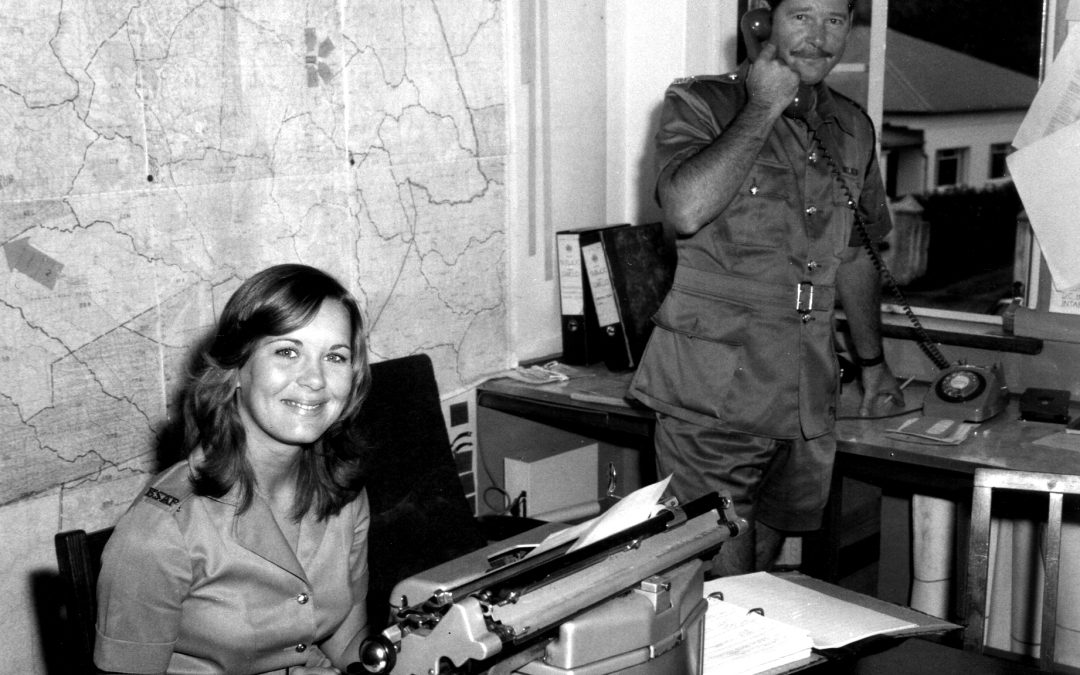
The Uniform Branch was, naturally, the mainstay of the BSA Police. Originally the force was split by distict partition between the District and Town Branches, but later provincialisation of the force brought both district and town stations under single commands in geographic areas. More specialisation occurred on the larger town stations, giving rise to a number of sections, while district branch policemen often became ‘jacks of all trades’. The first line of call by the public to report crime or seek assistance was the, ominously named, Charge Office. The larger cities which deployed roving motor vehicle, B-Car, patrols had call receptions centres referred to as Information Rooms or Control Rooms. These were the hub of the force. Behind this facade lay several sections all involved with objective of policing in Rhodesia, including:
- Urban and District police stations formed the core of the Uniformed Branch structure in almost every town in Rhodesia, no matter how remote;
- Enquiries Sections – involved with follow-up on original reports of crime;
- Cadet Branch – for youth under the age of 18;
- Crime Prevention Unit – a plain clothes section utilised for under-cover work, generally involving illicit alchohol, drug abuse, and anti-social behaviour;
- Licence Inspectorate – the inspectors of liquor licencing and other statutory licencing;
- Sub-Aqua Section – a specialist section involved with under-water recovery of exhibits, including on occasions the bodies of drowned persons and murder victims;
- Ground Coverage – a grass roots intellince system, generally deployed in plain clothes and mostly in the rural or ‘high density’ areas to seek information on popular feelings or dissent within the community;
- Dog Section (Operational) – the Dog Section played an important role in both crime detection and prevention through the use of tracker dogs and guard dogs. As the guerilla war evolved, dogs were used in support of police units tracking terrorist gangs (see Police Animals);
- Police Anti Terrorist Unit (Regular) – most districts affected by insurgent infiltrations deployed PATU units to track and combat terrorism in their respective areas, and often operated in support of other police units and the military in this role.