Uniform Branch

Uniform Branch

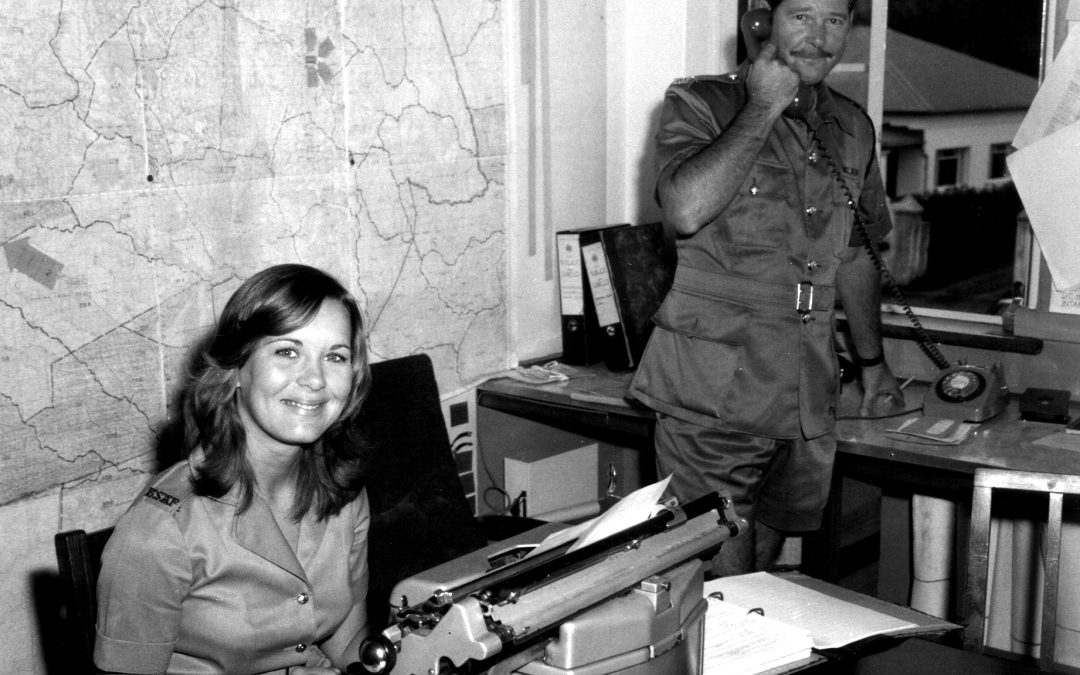
The Uniform Branch was, naturally, the mainstay of the BSA Police. Originally the force was split by distict partition between the District and Town Branches, but later provincialisation of the force brought both district and town stations under single commands in geographic areas. More specialisation occurred on the larger town stations, giving rise to a number of sections, while district branch policemen often became ‘jacks of all trades’. The first line of call by the public to report crime or seek assistance was the, ominously named, Charge Office. The larger cities which deployed roving motor vehicle, B-Car, patrols had call receptions centres referred to as Information Rooms or Control Rooms. These were the hub of the force. Behind this facade lay several sections all involved with objective of policing in Rhodesia, including:


  • Urban and District police stations formed the core of the Uniformed Branch structure in almost every town in Rhodesia, no matter how remote;
  • Enquiries Sections – involved with follow-up on original reports of crime;
  • Cadet Branch – for youth under the age of 18;
  • Crime Prevention Unit – a plain clothes section utilised for under-cover work, generally involving illicit alchohol, drug abuse, and anti-social behaviour;
  • Licence Inspectorate – the inspectors of liquor licencing and other statutory licencing;
  • Sub-Aqua Section – a specialist section involved with under-water recovery of exhibits, including on occasions the bodies of drowned persons and murder victims;
  • Ground Coverage – a grass roots intellince system, generally deployed in plain clothes and mostly in the rural or ‘high density’ areas to seek information on popular feelings or dissent within the community;
  • Dog Section (Operational) – the Dog Section played an important role in both crime detection and prevention through the use of tracker dogs and guard dogs. As the guerilla war evolved, dogs were used in support of police units tracking terrorist gangs (see Police Animals);
  • Police Anti Terrorist Unit (Regular) – most districts affected by insurgent infiltrations deployed PATU units to track and combat terrorism in their respective areas, and often operated in support of other police units and the military in this role.

In Memoriam: Bruce Feast 7067

Feast, Bruce Edward, aged 85 (7067;  Inspector; served from February 1964 to December 1980; member of the United Kingdom Regimental Associations) passed away 23 December 2025 at Sutton Ely, Cambridgeshire, England
Message for Hon. Secretary
It is with regret that I have to advise that 7067 Bruce Edwin Feast passed away on 23 December 2025 in Sutton Ely, Cambridgeshire, England. Bruce attested in the BSA Police in February 1964 and continued to serve in the ZRP until his discharge in December 1980, leaving with the rank of Inspector. Bruce was a member of the British South Africa Police Regimental Association UK.

Traffic Branch

Traffic Branch

The origins of the BSA Police Traffic Branch are a little vague aside from the fact that it was first establish at Bulawayo in 1944 and comprised a police reservist and six constables. The expansion of post Second World War vehicle traffic, in the larger towns saw the need for the introduction of legislation to control vehicle traffic, which in 1948 was made up of 40,600 vehicles (5,700 in 1945) of which 23,200 were private cars. Like other sections within the force, the Traffic Branch evolved with enforcing legislation, such as the Roads and Road Traffic Act. Special sections within the branch dealt with highway traffic, and there were sections involved in accident investigation.

  • Investigations Section
  • Highway Patrol
  • Station Level Traffic Sections (larger stations only)
  • Car Theft Section
  • Police Driving School (was also in the domain of the Training Branch at some time)

Criminal Investigation Department

Criminal Investigation Department

The Criminal Investigation Department (CID), also referred to as the plain clothes branch, was the core of the force’s serious crime detection and prevention initiatives. Plain clothes work appears to have its origins within the Southern Rhodesia Constabulary, circa 1911 and there is evidence of a fingerprint bureau having been established as early as 1907. Immigration control had been implemented in 1903 and by 1913 the Officer Commanding the CID was the de facto Chief Immigration Officer. Since inception, the CID had its headquarters in Bulawayo. This was changed in February 1959, when the Headquarter element was moved to Salisbury to a set of offices within Morris Depot. The general structure of the CID was as indicated below:


  • Headquarters Section

    • Forensic Science Laboratory
    • Central Criminal Bureau (Fingerprint Bureau)
    • Criminal Records Office
    • Firearms Registry
    • Deportations Section
    • Scenes of Crime Examination Section (Photographic Sections at major CID Stations)
    • Questioned Document Examiner

  • Crimes of Violence (also known as Homicide Section in earlier times)
  • Law and Order Section (created in the early 1960’s)
  • Immigration Section (until 1954)
  • Property Section
  • Illicit Gold Dealing Section
  • Drug Section – illicit and illegal drugs control
  • Fraud Section – dealing in falsitas crimes
  • Photographic Studio (major centers for scenes of crime photography)

Provincial Stations and those in the smaller towns would deploy detectives to investigate crime across the spectrum of the above disciplines. Each province was commanded by a Provincial Criminal Investigation Officer (PCIO) responsible to the Officer Commanding CID.

Depot

Depot

Training was a cornerstone of the BSA Police, and the dedicated Training Branch oversaw all instruction at the two principal depots, Morris and Tomlinson. Every recruit passed through one of these establishments on a structured six‑month course that combined discipline, law, fieldcraft, and practical policing skills; for those at Morris Depot, this foundation was followed by an additional phase at the Driving School, one at Cranborne Barracks and another in Bulawayo, ensuring that junior ranks entered service fully prepared for the operational demands of the force.

  • Tomlinson Depot
  • Police Band
  • Morris Depot
  • Armoury Section
  • Ballistics Section
  • Musketry Section
  • Provost Section
  • Police Dog Section (Training)