Bodle, William ‘Billy’ (1855-1924)

Bodle, William ‘Billy’ (1855-1924)

Regimental Sergeant-Major

(BSA Company Police); Served October 1889 to 31 August 1891

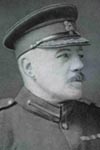
William Bodle was born on 5 July 1855 in Alfriston, Sussex. He began his military career with the Sherwood Foresters (Nottingham and Derbyshire Regiment) before transferring first to the 17th Lancers and later to the 6th Inniskilling Dragoons; a move that brought him to South Africa. He saw active service in the Basuto War of 1880–81 with the Cape Mounted Rifles, gaining the experience that would shape his later career in colonial policing.
In 1884, Bodle was appointed Regimental Sergeant Major of the Bechuanaland Border Police. Five years later, in October 1889, Cecil Rhodes engaged him to help raise and organise the force that would accompany the Pioneer Column into Mashonaland. He accordingly joined the newly formed British South Africa Company Police as its Regimental Sergeant Major. After being released during an early austerity drive, he entered commerce in Fort Salisbury. However, he soon returned to uniform with the Salisbury Horse and took part in the occupation of Matabeleland. He subsequently became commander of the newly created Matabeleland Mounted Police with the rank of Major.
Bodle later served in the Rhodesia Mounted Police during the Jameson Raid, was captured by Boer forces, and deported to England. Undeterred, he returned to Rhodesia and re‑attested into the British South Africa Police, Matabeleland Division, as second‑in‑command with the rank of Lieutenant‑Colonel, eventually succeeding Nicholson. He retired from the BSA Police in April 1909 and returned to England.
During World War I he commanded the Norfolk and Suffolk Territorial battalions and later the Labour Battalion, receiving the honorary rank of Brigadier‑General in August 1917. Bodle, who had been awarded the CMG in 1901, died in his native Alfriston on 9 July 1924.

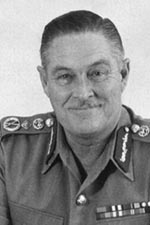
Allum, Peter Kevin

Allum, Peter Kevin

Commissioner

7 February 1978 to 1 August 1980 (Cessation of the British South Africa Police)
(1920-1995) CLM; OLM; PCD; PCM; PLSM

Peter Kenneth Allum, born on 12 June 1926 in Isleworth, United Kingdom, was educated at Gunnersbury Catholic Grammar School before beginning his early service in the Fleet Air Arm, an experience that shaped the discipline and technical competence he later brought to policing. He attested into the British South Africa Police as a trooper on 28 April 1946 and soon gravitated toward detective work, spending almost his entire career within the Criminal Investigation Department. His postings took him across the country, including Beitbridge (Immigration), Umtali, Salisbury, Bulawayo and Gwelo, where he developed a reputation for methodical investigative skill and steady leadership. Commissioned in 1960, Allum rose steadily through the CID hierarchy, becoming Provincial Commander (PCIO) for the Midlands Province in 1963 and later for Salisbury and Mashonaland in 1967. On 1 October 1970 he was appointed Officer Commanding CID, placing him at the centre of major criminal and security investigations during a turbulent period. His promotion to Deputy Commissioner (Crime and Security) on 7 February 1974 reflected both his seniority and his strategic importance within the organisation. Decorated with the PCD (1973), OLM (1976), CLM (1978), CPM and PLSM, Peter Allum retired to South Africa, where he died in Carltonville on 17 April 2015.

Deputy Commissioners
  • !
    Crime and Security – Denley, Jack (4261) (1923-1985) OLM; PCD; CPM; PLSM; RGSM – 7 February 1978 to 1 August 1980 (Cessation of the British South Africa Police). He continued as Deputy Commissioner of the Zimbabwe Republic Police until 6 February 1982 succeeding Allum as Commissioner.
  • !
    Administration – Atkinson, George (4094) (1923-1990) OLM; PCD; CPM; PLSM; RGSM 22 August 1977 to 22 September 1981
  • !
    Administration – Stuart, George Charles (4736) (b.1929) PMM, PLSM (and Bar), RGSM 22 September 1981 to 13 September 1983
  • !
    Personnel and Recruitment – Murray, Philip Stuart (4437) (1928-1995) PCD; PMM; PLSM; MLM; RGSM – ? to 1 May 1982 23

Return to Commissioners

Pennefather, Edward Graham (1850–1928)

Pennefather, Edward Graham (1850–1928)

Lt. Colonel – 1 March 1890 to 1892

Edward Graham Pennefather, born on 21 February 1850, pursued a long and varied military and policing career that spanned several continents and major imperial campaigns. He joined the British Army as a young man and was commissioned in April 1873 while serving with the 6th (Inniskilling) Dragoons, a regiment with a distinguished cavalry tradition. Pennefather saw active service in both the Zulu Campaign and the First Boer War, experiences that shaped his reputation as a capable field officer and contributed to his promotion to Lieutenant Colonel in October 1888. In November 1889 he was appointed commander of the British South Africa Company Police, a role that placed him at the centre of early colonial expansion in Southern Africa. He participated in the occupation of Mashonaland and was directly involved in the skirmishes at Massi Kessi, events that underscored the volatile nature of the region during this period. When the “military police” accompanying the Pioneer Column were disbanded, Pennefather was relieved of his command and subsequently returned to regular army service. He retired from the Army in May 1895 and soon after accepted the post of Inspector General of Police in the Straits Settlements, extending his influence into Southeast Asia. Edward Pennefather died in Natal on 29 April 1928, closing a career marked by mobility, conflict, and administrative responsibility across the British Empire.

Headquarters

Headquarters

Police General Headquarters situated in then Montague Avenue, Salisbury was the hub and control of command within the British South Africa Police.

The Commissioner of Police was responsible to the Minister of Law and Order for the efficient policing of the nation.  He had two Deputy Commissioners:

  • Deputy Commissioner (Crime and Security) was responsible for all matters handled by:

    • Criminal Investigation Department
    • Duty Uniform Branch under the control of a Chief Staff Officer (Police) who oversaw:

      • Duty Uniform Operations
      • Police Reserve

    • Special Branch (Internal) although Officer Commanding Special Branch also had the title the Director Internal (DIN) Branch 1 and reported to the Director General (DG) of the Central Intelligence Organisation (CIO).
    • Signals

  • Deputy Commissioner (Administration) : The rank of Deputy Commissioner was first introduced in 1958, following the recommendations of the Mundy and subsequent commissions, which reviewed the structure and remuneration of the entire force. The Deputy Commissioner (Administration) was responsible to the Commissioner for administration of the following portfolios :

    • Administration
    • Finance
    • Personnel
    • Establishments
    • Press Liaison
    • Quartermaster’s Section

      • Armaments
      • Ordnance Stores
      • Pioneers (building and construction)
      • Printers
      • Saddlers
      • Tailors

    • Transport
    • Recruiting
    • Training
    • Welfare and Sport

Sherren, Peter Dennis Wray Richard

Sherren, Peter Dennis Wray Richard

Commissioner 

7 February 1974 to 6 February 1978
(1920-1995) CLM; OLM; PCD; PCM; PLSM

Peter Sherren, born on 16 August 1920 in Wimereux, France, was educated at Leigh Hall College in Essex, where he distinguished himself in sport before entering the family business. His ambitions, however, lay further afield. Drawn to Africa, he attested into the British South Africa Police on 13 August 1939, just weeks before the outbreak of the Second World War. The early years of his service were spent in rural districts, gaining the grounding that would shape his later leadership. He was subsequently seconded to active wartime duty, returning to Rhodesia in 1946 to resume his police career.
Sherren rose steadily through the ranks. Commissioned in October 1956, he went on to hold key command appointments in Umtali and Fort Victoria Districts, followed by the senior provincial command in Matabeleland. His performance in these posts led to his transfer to General Headquarters, where he became a central figure in the organisation’s senior leadership. In 1970 he was promoted to Deputy Commissioner, responsible for Crime and Security, a portfolio of considerable strategic weight.
He died in Harare on 16 August 1995. His decorations included the CPM (1959), PCD (1971), OLM (1973 and 1978), CLM (1977), and PLSM.

Deputy Commissioners
  • !
    Crime and Security – Allum, Peter Kevin (3939) (b.1926 ) CLM; OLM; PLSM; RGSM – 7 February 1974 to 6 February 1978
  • !
    Administration – Jouning, Leonard James (3968) (1921-1980) OLM; PCD; CPM; PLSM; RGSM 8 July 1973 – to 21 August 1977 20
  • !
    Administration – Atkinson, George21 (4094) (1923 -1990 ) OLM; PCD; CPM; PLSM; RGSM 22 August 1977 to 22 September 1981 22

Return to Commissioners