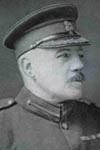
Blatherwick, James Kincaid ‘Jimmy’ (1869-1918)


Regimental Sergeant Major – 1897 to June 1917
James “Jimmy” Blatherwick (Force No. 20) was born on 2 January 1869 in Cape Town, South Africa. He began his uniformed career in 1890 with the Bechuanaland Border Police, one of the frontier forces tasked with maintaining order across Britain’s expanding southern African territories. In 1896 he transferred to the British South Africa Police and, the following year, was appointed Regimental Sergeant Major—a role he would hold with distinction for nearly two decades.
Blatherwick first entered Rhodesia with the Matabeleland Relief Force during the Second Matabele War, serving in the campaign to suppress the uprising. His long service placed him at the centre of several formative conflicts, including both the Matabele rebellions and the Second Boer War, where the BSAP provided mounted infantry and border security. In 1911 he was selected for the BSAP contingent sent to London to represent the force at the Coronation of King George V, a mark of his standing within the regiment.
Promoted to Inspector in 1913, he later received a wartime military commission in February 1917, rising from Lieutenant to Captain and taking command of the Depot. Blatherwick died in Salisbury on 26 November 1918 during the influenza pandemic, shortly after the death of his wife. A memorial to him was erected at Morris Depot in 1921.
The Blatherwick Memorial: Morris Depot

A familiar and quietly imposing sight to generations of Morris Depot recruits from 1921 onwards was the Blatherwick Memorial, positioned on the northern edge of the Green Square where daily parades, inspections, and passing‑out ceremonies took place. The memorial was erected in honour of Regimental Sergeant Major George Blatherwick, one of the most respected early figures of the BSA Police, whose long service and uncompromising standards left a deep imprint on the character of the Force. His death in 1920 was felt keenly across the organisation, prompting senior officers and former colleagues to commission a permanent tribute at the Depot he had helped shape.
At the unveiling ceremony, Major General Sir Alfred H. M. Edwards, KBE, CB, MVO, the Commandant‑General of the BSA Police, paid a moving tribute to Blatherwick’s life and service. “Rhodesia has lost a true soldier, a fine character, and the Government a loyal servant… His loss to the Corps, which he loved, and for which he had done so much, is irreparable; the memory of him will, however, remain, and his example might well be accepted as the ideal to which all ranks should strive to attain.” Edwards went on to emphasise that Blatherwick had embodied the newly adopted regimental motto, Pro rege, pro lege, pro patria, the words now inscribed at the foot of the memorial tablet and long regarded as a reminder of the standards expected of every recruit who passed through the Depot.
Return to Regimental Sergeant Majors