Headquarters

Headquarters

Police General Headquarters situated in then Montague Avenue, Salisbury was the hub and control of command within the British South Africa Police.

The Commissioner of Police was responsible to the Minister of Law and Order for the efficient policing of the nation.  He had two Deputy Commissioners:

  • Deputy Commissioner (Crime and Security) was responsible for all matters handled by:

    • Criminal Investigation Department
    • Duty Uniform Branch under the control of a Chief Staff Officer (Police) who oversaw:

      • Duty Uniform Operations
      • Police Reserve

    • Special Branch (Internal) although Officer Commanding Special Branch also had the title the Director Internal (DIN) Branch 1 and reported to the Director General (DG) of the Central Intelligence Organisation (CIO).
    • Signals

  • Deputy Commissioner (Administration) : The rank of Deputy Commissioner was first introduced in 1958, following the recommendations of the Mundy and subsequent commissions, which reviewed the structure and remuneration of the entire force. The Deputy Commissioner (Administration) was responsible to the Commissioner for administration of the following portfolios :

    • Administration
    • Finance
    • Personnel
    • Establishments
    • Press Liaison
    • Quartermaster’s Section

      • Armaments
      • Ordnance Stores
      • Pioneers (building and construction)
      • Printers
      • Saddlers
      • Tailors

    • Transport
    • Recruiting
    • Training
    • Welfare and Sport

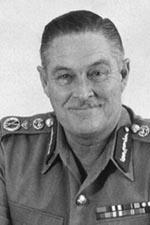
Sherren, Peter Dennis Wray Richard

Sherren, Peter Dennis Wray Richard

Commissioner 

7 February 1974 to 6 February 1978
(1920-1995) CLM; OLM; PCD; PCM; PLSM

Peter Sherren, born on 16 August 1920 in Wimereux, France, was educated at Leigh Hall College in Essex, where he distinguished himself in sport before entering the family business. His ambitions, however, lay further afield. Drawn to Africa, he attested into the British South Africa Police on 13 August 1939, just weeks before the outbreak of the Second World War. The early years of his service were spent in rural districts, gaining the grounding that would shape his later leadership. He was subsequently seconded to active wartime duty, returning to Rhodesia in 1946 to resume his police career.
Sherren rose steadily through the ranks. Commissioned in October 1956, he went on to hold key command appointments in Umtali and Fort Victoria Districts, followed by the senior provincial command in Matabeleland. His performance in these posts led to his transfer to General Headquarters, where he became a central figure in the organisation’s senior leadership. In 1970 he was promoted to Deputy Commissioner, responsible for Crime and Security, a portfolio of considerable strategic weight.
He died in Harare on 16 August 1995. His decorations included the CPM (1959), PCD (1971), OLM (1973 and 1978), CLM (1977), and PLSM.

Deputy Commissioners
  • !
    Crime and Security – Allum, Peter Kevin (3939) (b.1926 ) CLM; OLM; PLSM; RGSM – 7 February 1974 to 6 February 1978
  • !
    Administration – Jouning, Leonard James (3968) (1921-1980) OLM; PCD; CPM; PLSM; RGSM 8 July 1973 – to 21 August 1977 20
  • !
    Administration – Atkinson, George21 (4094) (1923 -1990 ) OLM; PCD; CPM; PLSM; RGSM 22 August 1977 to 22 September 1981 22

Return to Commissioners

Uniform Branch

Uniform Branch

The Uniform Branch was, naturally, the mainstay of the BSA Police. Originally the force was split by distict partition between the District and Town Branches, but later provincialisation of the force brought both district and town stations under single commands in geographic areas. More specialisation occurred on the larger town stations, giving rise to a number of sections, while district branch policemen often became ‘jacks of all trades’. The first line of call by the public to report crime or seek assistance was the, ominously named, Charge Office. The larger cities which deployed roving motor vehicle, B-Car, patrols had call receptions centres referred to as Information Rooms or Control Rooms. These were the hub of the force. Behind this facade lay several sections all involved with objective of policing in Rhodesia, including:


  • Urban and District police stations formed the core of the Uniformed Branch structure in almost every town in Rhodesia, no matter how remote;
  • Enquiries Sections – involved with follow-up on original reports of crime;
  • Cadet Branch – for youth under the age of 18;
  • Crime Prevention Unit – a plain clothes section utilised for under-cover work, generally involving illicit alchohol, drug abuse, and anti-social behaviour;
  • Licence Inspectorate – the inspectors of liquor licencing and other statutory licencing;
  • Sub-Aqua Section – a specialist section involved with under-water recovery of exhibits, including on occasions the bodies of drowned persons and murder victims;
  • Ground Coverage – a grass roots intellince system, generally deployed in plain clothes and mostly in the rural or ‘high density’ areas to seek information on popular feelings or dissent within the community;
  • Dog Section (Operational) – the Dog Section played an important role in both crime detection and prevention through the use of tracker dogs and guard dogs. As the guerilla war evolved, dogs were used in support of police units tracking terrorist gangs (see Police Animals);
  • Police Anti Terrorist Unit (Regular) – most districts affected by insurgent infiltrations deployed PATU units to track and combat terrorism in their respective areas, and often operated in support of other police units and the military in this role.

In Memoriam: Bruce Feast 7067

Feast, Bruce Edward, aged 85 (7067;  Inspector; served from February 1964 to December 1980; member of the United Kingdom Regimental Associations) passed away 23 December 2025 at Sutton Ely, Cambridgeshire, England
Message for Hon. Secretary
It is with regret that I have to advise that 7067 Bruce Edwin Feast passed away on 23 December 2025 in Sutton Ely, Cambridgeshire, England. Bruce attested in the BSA Police in February 1964 and continued to serve in the ZRP until his discharge in December 1980, leaving with the rank of Inspector. Bruce was a member of the British South Africa Police Regimental Association UK.

Traffic Branch

Traffic Branch

The origins of the BSA Police Traffic Branch are a little vague aside from the fact that it was first establish at Bulawayo in 1944 and comprised a police reservist and six constables. The expansion of post Second World War vehicle traffic, in the larger towns saw the need for the introduction of legislation to control vehicle traffic, which in 1948 was made up of 40,600 vehicles (5,700 in 1945) of which 23,200 were private cars. Like other sections within the force, the Traffic Branch evolved with enforcing legislation, such as the Roads and Road Traffic Act. Special sections within the branch dealt with highway traffic, and there were sections involved in accident investigation.

  • Investigations Section
  • Highway Patrol
  • Station Level Traffic Sections (larger stations only)
  • Car Theft Section
  • Police Driving School (was also in the domain of the Training Branch at some time)